


A return is the moment a customer decides whether they will buy from you again. If they have to write three times, search for the order number, and figure out where to send the package, that's what they'll remember. For the store, each return handled via email is ten minutes of unplanned work.
Automated returns don't mean a machine decides on returns. It means simple cases are handled by rules, and the customer enters all necessary information in one place. You only deal with what truly requires a human touch.
Where returns consume the most time
When we reviewed how the stores we work with handle returns, the same steps kept repeating:
Finding the order. The customer writes "returning shoes," and you search for which order and which pair.
Back-and-forth about the reason and condition. Why are they returning it, is the item damaged, do they have a photo?
Address and label. The customer doesn't know where to send it, whether they pay for shipping, and which carrier to use.
What actually arrived. The package arrives without a note, with two out of three items.
Refunding the money. Manually calculating the amount, deducting shipping, issuing a credit note, transferring to the correct account.
Exchange. Two separate tasks, a return and a new order, during which the customer waits.
None of these steps are difficult. But together, with a few dozen returns a month, they mean a day or two of work that brings no sales.
Six steps you can leave to the system
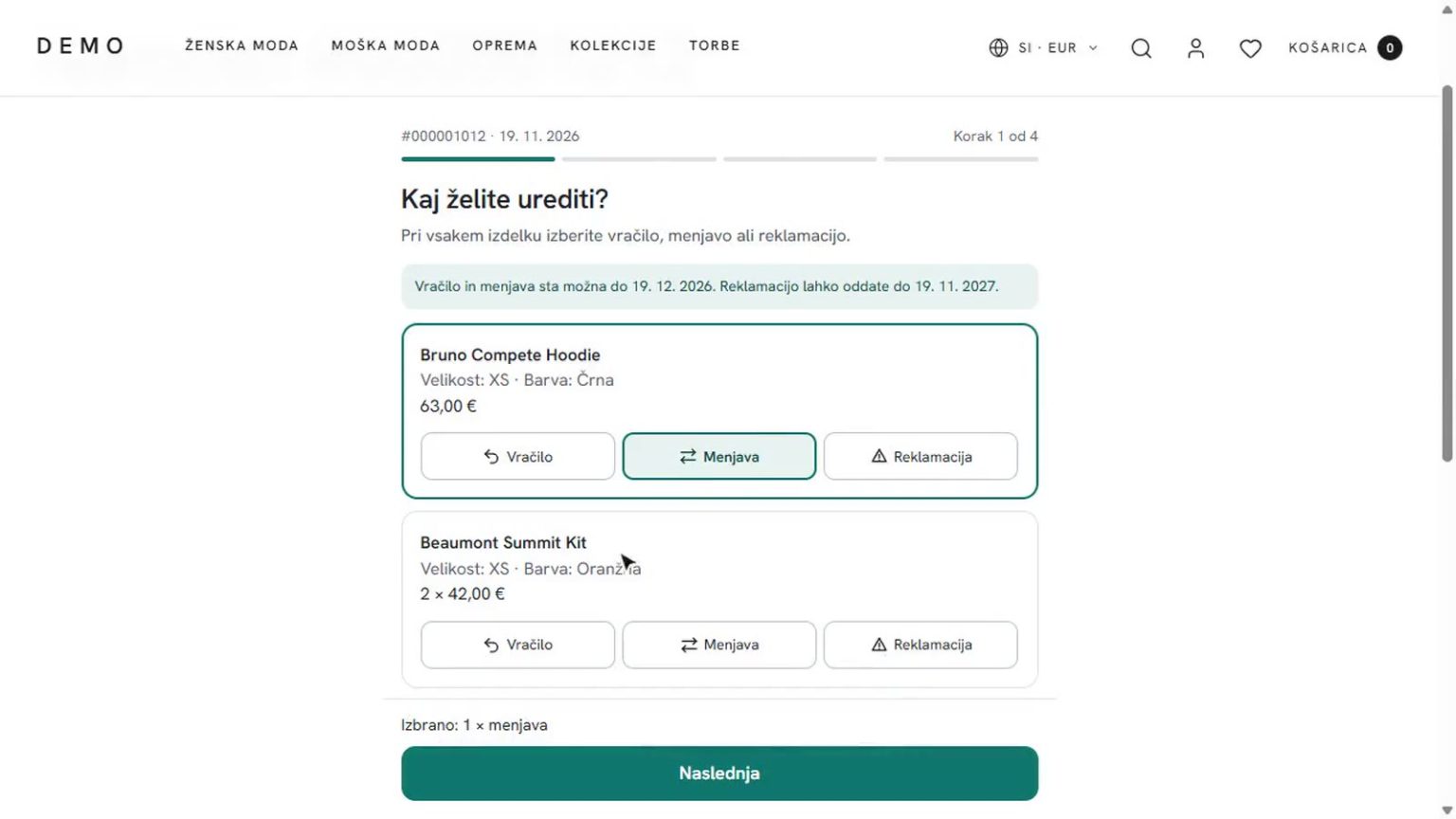
1. The customer submits the request
On the returns page, the customer selects the order (in their account or with the order number and email address), marks the items, quantity, and reason, and adds a photo if needed. Since the data is complete upon submission, most of the back-and-forth communication is eliminated.
2. Rules instead of judgment
Set the return deadline, items that can't be returned (hygiene, custom products), and the amount up to which a request is automatically approved, once. A customer outside the deadline finds out immediately, not after three messages.
3. A label instead of emails
The biggest saving for the customer: instead of an address, they get a label. They choose a parcel locker or drop-off point, a label for the post office, or pickup by a courier at their door. With Slovenian carriers, this is possible today through return services from GLS, Express One, Pošta Slovenije, and DPD, if you have them in your carrier contract. You can deduct the label cost from the refund or cover it yourself.
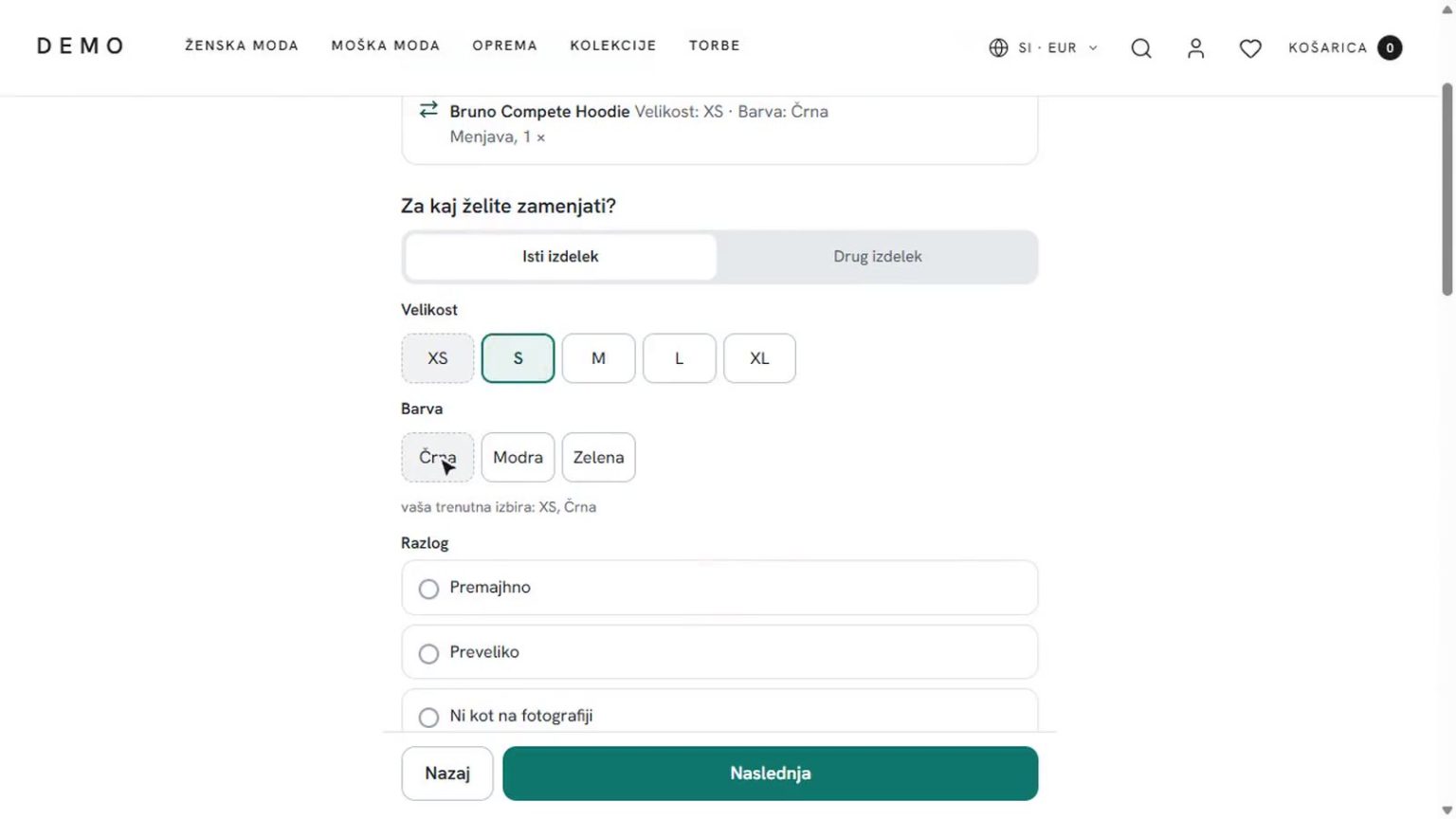
4. Exchange instead of return
For clothing and footwear, a large part of returns is actually the wrong size. If the customer can choose a different size in the request, the sale is retained. The new size is reserved so it isn't sold to someone else, and the customer pays the price difference or gets a refund. A free first size exchange is often cheaper than losing a customer.
5. Refund with one click
When the package arrives, you mark what you've received and in what condition, and the system calculates the amount and creates a credit note. The money goes to the card, as store credit (optionally with a bonus to encourage a new purchase), or to a bank account. For cash on delivery payments, the customer enters an IBAN, which is verified; if the account holder's name doesn't match the order, the request comes to you for review, as this is a common pattern of abuse.
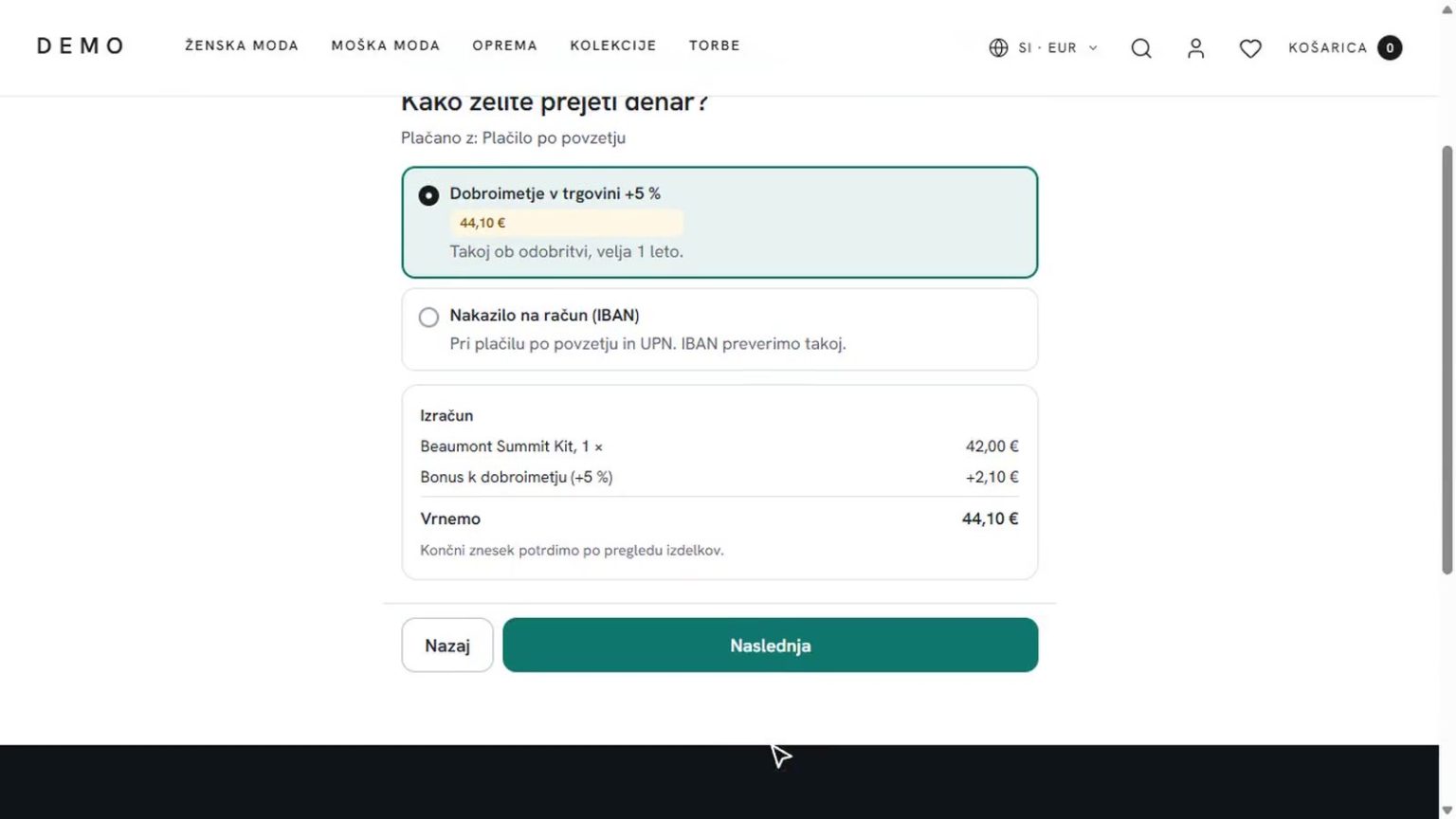
6. The customer always knows where things stand
Every time there's an update, the customer receives an email: request received, approved, package received, money refunded. Questions like "where's my money" almost disappear because the answer is already in their inbox.
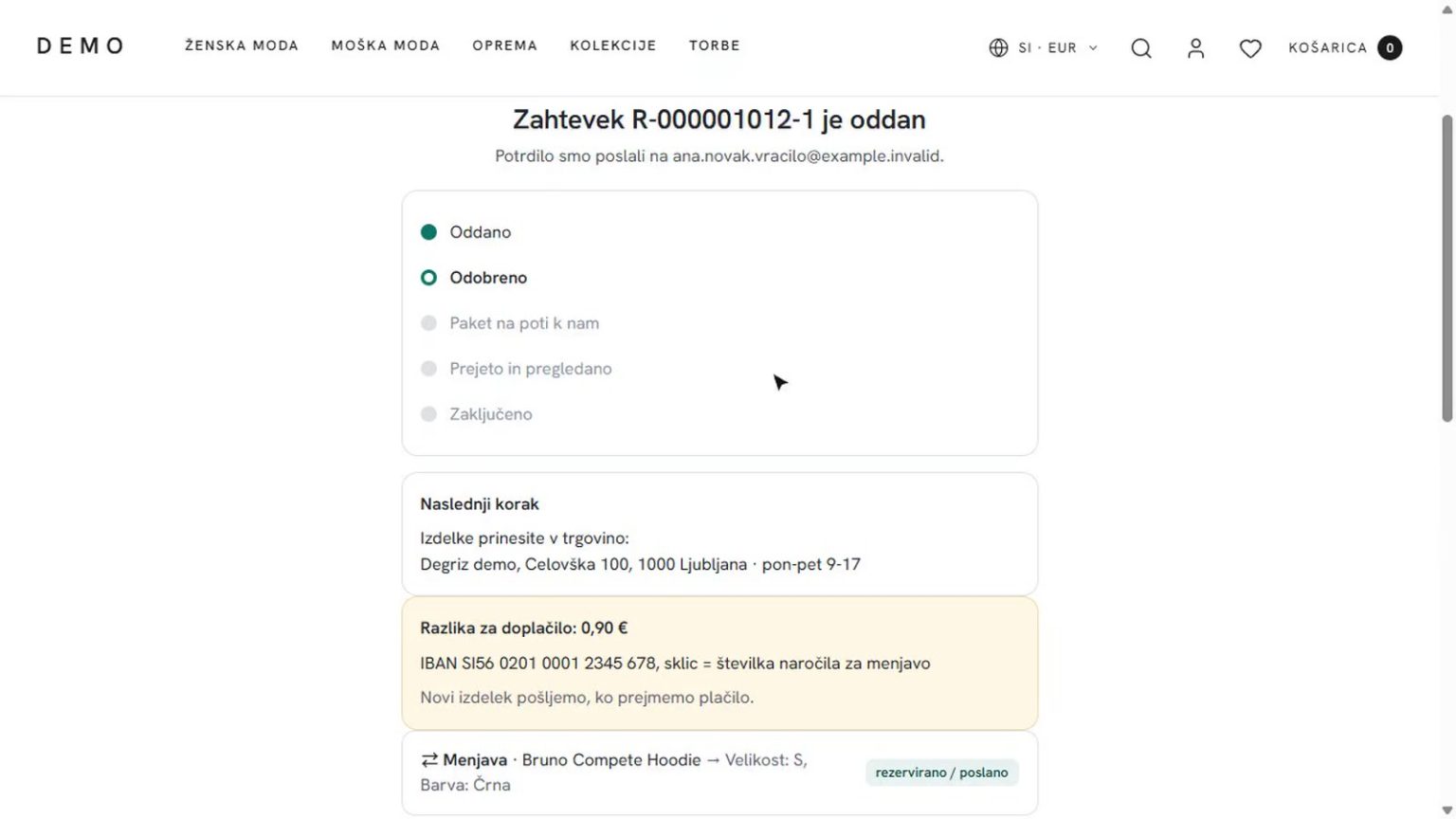
What remains manual, and rightly so
Inspection of returned goods. Whether the product is unused, or if any deductions are needed for wear and tear.
Complaints. The issue, photo, and desired solution (repair, replacement, price reduction, or refund) are organized, but the decision is yours.
Exceptions. Refund to someone else's account, changed address for exchange, customer with many returns. Rules flag them, you decide.
What to measure
When returns are in one place, you also get data that you never collect via email: return rate by product, most common reasons, and how many returns turned into exchanges. If "wrong size" keeps coming up for a product, the solution might be a better size chart, not a better return process.
How we do it
For Magento 2, we've combined everything described into the Returns, Exchanges, and Complaints module, which works with the Luma and Hyvä themes, and for WooCommerce, an equivalent plugin. Labels are created through our modules for GLS, Express One, Pošta Slovenije, and DPD. Each carrier has different limitations, for example, Pošta Slovenije only allows return labels with a PPN contract, so we check these with you during installation.
If returns in your store are currently handled via email, write to us. We'll look at how much time they take and which steps are worth automating for you.

My name is Anže and I am a Magento certified solution specialist and builder of many award-winning online stores. I am the architect of all Degriz projects.
Write to me →