As advertising prices rise, statistics for stores and websites matter more and more, because we need to know who we are advertising to in order to do it as efficiently as possible. Based on the results, we can tailor each page precisely to our potential customer. Even if you do not sell products or services directly online, it is the channel through which your customers find you. More and more people look for information online before they buy, and if you are not presented properly there, they will most likely not choose you but one of your competitors. Consumer statistics are a concrete basis for defining your consumer base. Every provider depends on numbers, and without them can hardly do business, as they have no consumers. Whether you sell cars or cosmetics, you must know that every market needs a different page, different page traffic, different content and so on. Even if things look similar, you cannot know what the differences in the numbers are unless you capture and test them.
Who are your consumers?
Everything starts with collecting data about your consumers. If you don't have data on consumers, you can't know what will work and what won't. You can only blindly guess and search for things that will work. But do you have time for that, and can you afford to spend huge amounts on marketing campaigns that don't work? Consumer data allows you to step out of mediocrity based on statistics through which you can make informed decisions to maximize your potential.
You must ensure that visitors to your site are converted into your customers. Even if you have the most optimized site and consequently a lot of traffic, it can happen that people will just look and not decide to make purchases or orders because your content will not attract them. Therefore, you must prepare content in such a way that it gets the maximum possible response.
If you have impulsive buyers, you need to make the ordering process as short as possible with many elements that attract them to purchase. Otherwise, you may have potential customers who make decisions based on other decisions and think more rationally; for such, you must offer a lot of relevant content that attracts them and explains everything before purchase.
Demographics - you need to know who your users are (how old they are, educated, etc.) so you can tailor the site and marketing campaigns for them. For example, if your consumers are teenage girls, you will prepare a lively site, while for retirees, you will prepare a serious site with large text, etc. You need to know that different things attract people and use that.
Different landing pages need to be prepared for different segments. But how do we know what is better for whom?
A/B testing
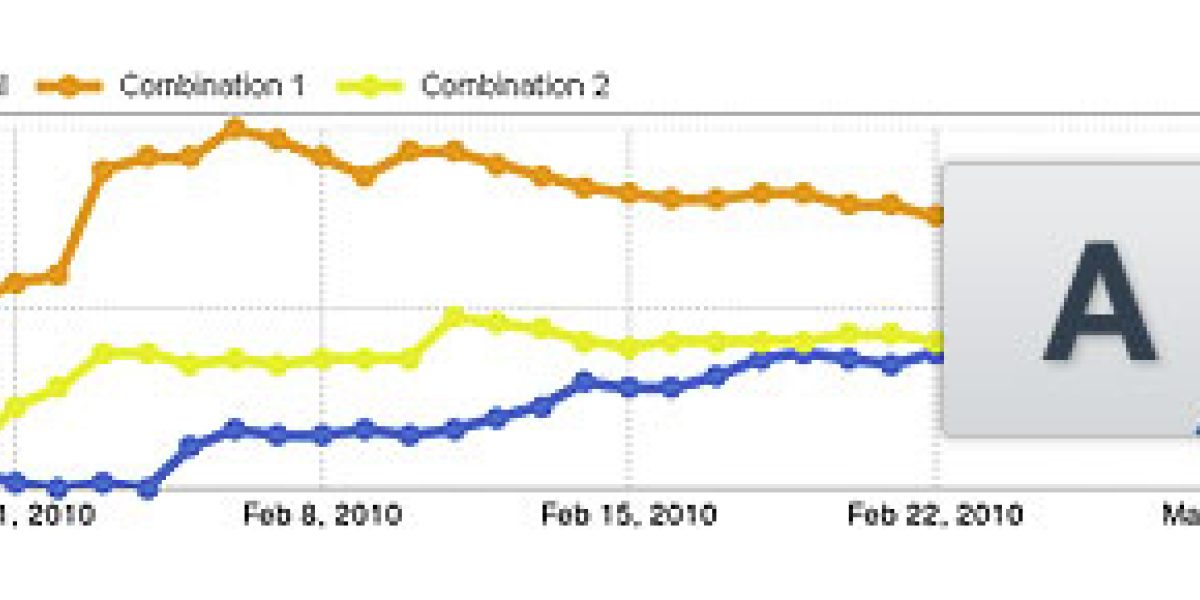
is the process of testing websites and their elements (advertising banners, content, photos, etc.). Basically, it involves preparing two or more versions of a page to which visitors are alternately directed. In this way, we find out which page is more effective. The effective one is certainly the one through which we get the most inquiries or enable the most purchases. The reason for testing is to increase conversion and ROI (Return On Investment). Our main goal is to convert as many visitors as possible into buyers through content and other elements, thus extracting more profit with the available resources. You must ensure that you have a sufficiently large sample group during testing to get accurate results!
A tool with which we can easily and effectively perform A/B testing is Google's Website Optimizer. The tool shows us which landing page was more attractive and consequently achieved more conversions. https://www.google.com/websiteoptimizer
Surveys
We must not forget about surveys, which are still an important factor in consumer analysis and through which we can get a lot of feedback. Of course, we somehow need to convince visitors to complete them, and we can do this by offering them some benefits or giving away an item/service.
What about email analysis?
How many messages you sent were read? What things in your email interested them? How much did you sell with the help of an email campaign? All this can now be monitored through various applications and much more. With the development of applications, you can track almost everything.
There are almost no limitations on which direction we can develop things since the internet has become a wealth of information, and based on testing and statistics, we can make small differences that have a big impact.

My name is Anže and I am a Magento certified solution specialist and builder of many award-winning online stores. I am the architect of all Degriz projects.
Write to me →