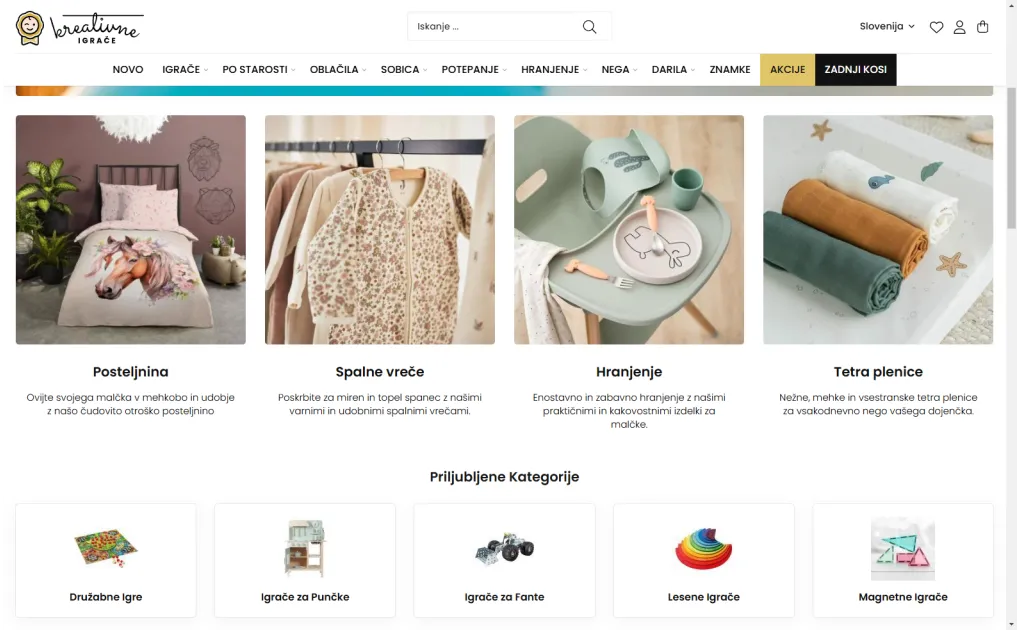
Did you know that with small changes in the content organization of categories on your online store, you can increase the number of visitors for free? This means you can attract people through search engines like Google without the need for expensive advertising campaigns. When you optimize categories with the right keywords, you will increase the visibility of your online store and increase the chances of potential customers finding you. With more visitors, there is also a greater likelihood of increased sales.
By optimizing categories for SEO (search engines), you will ensure that your store is more accessible and visible among the competition, which is already full of online stores. When done correctly, you will notice how your position in search engines improves, placing you on the first page of Google, where visitors are most likely to click on your product.
Now let's look at how simple steps for SEO optimization of your category can bring visitors and increase sales.

1. Keyword in the category name
The first and most important step for SEO optimization of categories is to include a keyword in the category name that people use to search for your products. If you want visitors to easily find you, your category name must be directly related to search terms. Search engines like Google recognize that the category matches the search terms, which helps you rank higher in search results.
2. Category description with included keyword
Once you have the correct category name, the next step is to create a quality category description that includes the keyword. This description helps search engines understand what your page is about and improves its ranking. The keyword should be included in the H2 heading and repeated several times in the text – it's best to bold it in certain parts for greater emphasis.
However, many merchants face the challenge that visitors prefer to immediately see the product offerings rather than a longer description at the top of the page. If the description is too long or takes up too much space, it can reduce the user experience. Fortunately, there are simple solutions:
- Move the description to the bottom of the page below the product list. This way, the description is still present for SEO, while visitors immediately see the products.
- Partial display with reveal option – use a "Read more" button or similar functionality that shows the full description only when the visitor shows interest. This is an elegant way to satisfy both search engines and users.
With a little adjustment, you can maintain a balance between good SEO optimization and user experience, increasing the chances that the visitor will stay on the page and make a purchase.

3. Meta description and keywords
In addition to the content of the category itself, you must also take care of the meta description and keywords that will help search engines rank your page. The meta description is that short text that appears under your page title in the search engine, so it must be attractive and contain the keyword. Additionally, don't forget about keywords that will help search engines recognize your page's content and rank it in the right places.
The meta description should have at least 10 keywords separated by commas and 150 characters of meta description.

4. FAQ Schema: Additional value for SEO
Adding FAQ schema questions to your category content is not only useful for users but also for SEO. Google rewards pages that offer additional value to visitors, which includes questions and answers that can help users. Additionally, your page will have a richer display in search engines, increasing the chances that users will click on it.

Small steps, big changes
Optimizing categories for SEO is one of the quickest and easiest ways to increase traffic to your online store without additional advertising costs. With the right keywords, good content structure, thoughtful description, and appropriate technical support, you can achieve that customers find you faster and click on your offer with more confidence.
Changes that may seem small – like renaming a category or adding a description – can bring surprising results. One of my categories, where I correctly used the keyword "online store creation", for example, moved from 100th place to the first page of Google, resulting in a noticeable increase in visitors.
If you're ready to take this step and improve your store's visibility, you can download my module for Magento 1 and Magento 2 for free on GitHub. The module will help you add content and FAQ schema questions to categories and improve your SEO strategy.
In the digital world, where advertising is becoming more expensive and less effective, it's these "small details" that determine who will gain visitors – and sales. Why not you too?
P.S. Don't have time to write descriptions? Read how you can easily arrange this with ChatGPT: Improve your online store with ChatGPT. If you need help, write to me at support, and I'll be happy to arrange everything for you!