

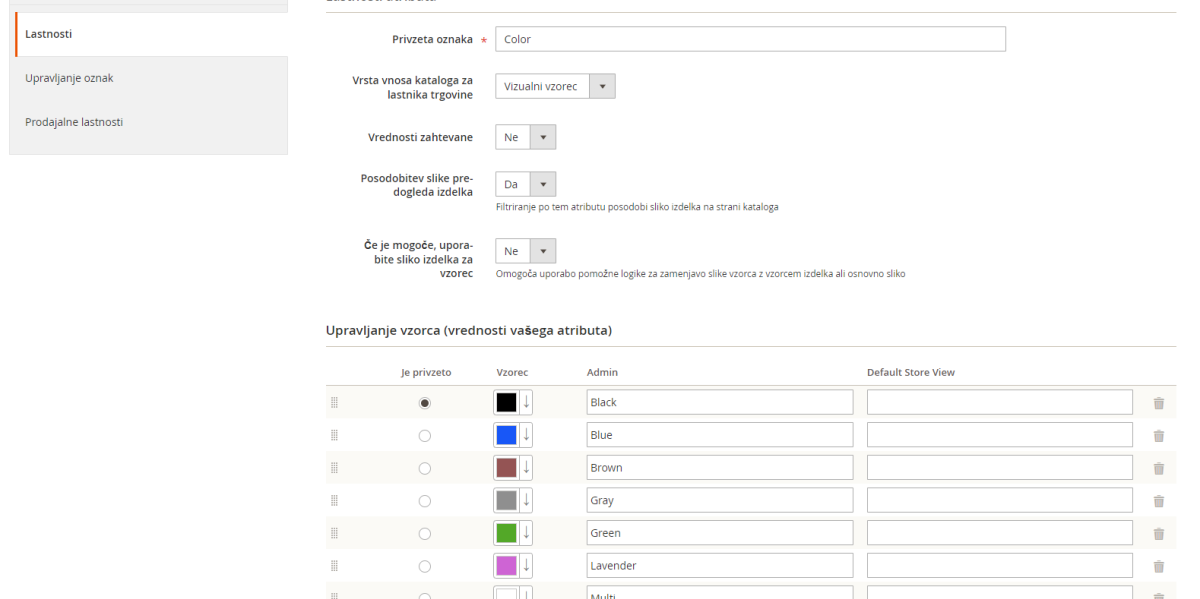
The more attributes or fields the items have, the more customization options we have for the appearance, and we can create a more functional page. Usually, when setting up a project for a client, we configure all these fields to be optimal, but even after everything is set up, changes can be made through the administration.
Why is a good distribution of attributes in an online store important?
With well-developed attributes, we can create better filtering in categories. By default, we have filtering available by price and category, but we can also add filtering by purpose of use, appearance, technical specifications, etc. The system works so that if we have items in a category with attributes that can be filtered, they will be displayed on the filtering side. Of course, we determine which attributes we want to filter by. In different categories, only the filters assigned to those items in the category are available. For example, if we have washing machines, we have a filter for motor power, capacity, and so on, but if we have clothes, then size, color, etc.
It is also good if we have a comparison of technical items, where if we have more attributes, the display of the comparison will be much better than if we have everything in one field, such as the item description.
If we are creative and make a custom online store, we usually use attributes for different displays on items (e.g., display of a new item, outlet, limited stock, etc.), and if we expand the store's functionalities, we can also add attribute pages, which can be very good for optimization and detailed displays.
When we have several brands in the store, we can add a new page for each brand where all the items of that brand are visible. Such a page can receive quite a bit of traffic through the search engine, and consequently, we can have some additional sales through it.
We add a logo image to the pages, and this logo can be displayed on different pages and linked to this page.
Video instructions for editing attributes in an online store

My name is Anže and I am a Magento certified solution specialist and builder of many award-winning online stores. I am the architect of all Degriz projects.
Write to me →